
In the Perth construction landscape, time is money, and accuracy is everything. For builders and engineers, the daily battle is against unforeseen delays, costly rework, and the endless stream of RFIs (Requests for Information) that can grind a project to a halt. While many factors contribute to a project’s success, one of the most critical—and often underestimated—is the quality of the structural drafting.
Mediocre structural drawings are more than just an annoyance; they are a significant project risk. They are the source of ambiguity on site, the cause of incorrect material orders, and the reason for frustrating clashes between trades. Exceptional structural drafting, on the other hand, is a force multiplier. It’s the seamless bridge between engineering theory and construction reality, providing the clarity and precision needed to build efficiently, safely, and profitably.
This guide is not for homeowners. This is a 101 for the professionals on the ground: the engineers who design the structures and the builders who bring them to life. We’ll dissect what separates adequate drawings from exceptional ones in the Perth context, explore the critical collaboration required, and detail how high-quality structural drafting de-risks your projects and protects your bottom line.

Section 1: The Critical Role of Structural Drafting in the Project Lifecycle
To a layperson, structural drawings might just look like a series of lines and symbols. To a professional, they are the single source of truth for the building’s skeleton. Structural drafting is the highly skilled process of translating the structural engineer’s design computations, sketches, and specifications into a detailed, compliant, and buildable set of technical drawings.
Its role is far more than simple transcription. An expert structural drafter acts as a vital link, performing several key functions:
- Interpreter & Visualiser: The drafter takes the engineer’s calculations for loads, stresses, and material capacities and represents them visually in a way that can be understood and executed by the construction team. They model the load paths, visualise the framing, and detail the connections that hold it all together.
- Compliance Guardian: They ensure that the details shown on the drawings accurately reflect the engineering specifications, which are themselves derived from the National Construction Code (NCC) and critical Australian Standards (like AS 3600 for concrete and AS 4100 for steel).
- Coordinator & Clash Detector: In a modern BIM environment, the structural drafter is on the front line of inter-disciplinary coordination. They are responsible for ensuring the structural frame fits seamlessly with the architectural design and doesn’t clash with mechanical, electrical, or plumbing (MEP) services. Identifying a clash between a beam and an HVAC duct in the model saves thousands of dollars compared to discovering it on site.
- Constructability Advocate: An experienced drafter, particularly one with local Perth knowledge, understands common construction practices. They can flag details that, while technically correct from an engineering standpoint, may be difficult or inefficient to build on site. This proactive feedback loop with the engineer is invaluable.
Ultimately, the structural drafting process is where the project’s structural integrity is documented for execution. Getting it right is fundamental to mitigating risk, controlling costs, and delivering a safe, quality structure.
Section 2: Anatomy of a Professional Perth Structural Drawing Set
A comprehensive set of structural drawings is a finely tuned package of information. For builders and engineers in Perth, knowing what to look for in a quality set can immediately signal the competence of the drafting partner. Here’s what a professional set should always include:
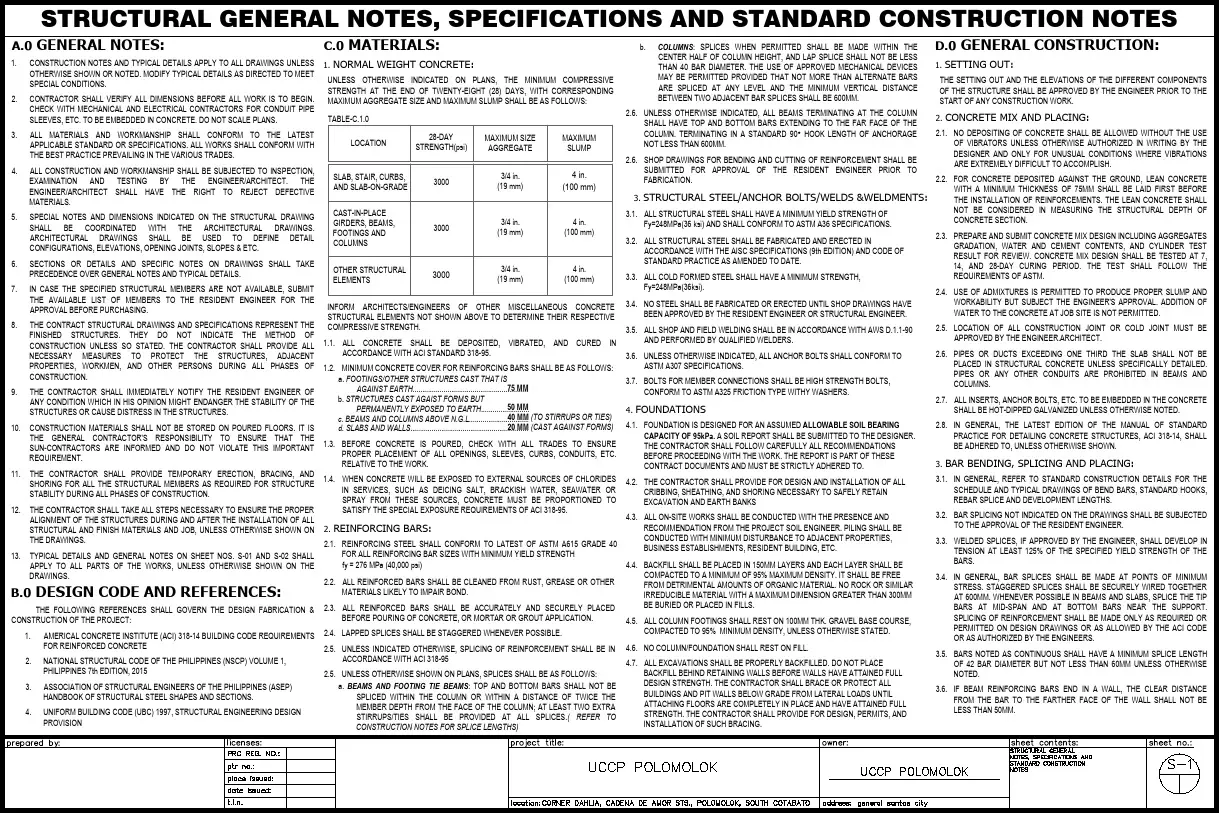
General Notes and Specifications – Structural Drawings
General Notes and Specifications
This is the instruction manual for the entire drawing set. It’s often the first page and is critically important. It should clearly define:
- Design codes and standards used (e.g., AS/NZS 1170, AS 3600).
- Material specifications (concrete strengths like 25MPa or 32MPa, reinforcing steel grades like N500, structural steel grades like 300PLUS).
- Site classification as per AS 2870 (e.g., “Class A,” “Class S,” “Class M”), which is vital for footing design in Perth’s varied soil conditions, from the sandy coastal plain to the clays of the foothills.
- Required concrete cover, lapping lengths for reinforcement, and welding specifications.
Foundation & Footing Plans
Given Perth’s predominantly sandy soils, robust footing design is paramount. This plan details the building’s foundation, showing:
- Layout, dimensions, and depths of all footings (e.g., strip footings, pad footings, raft slabs).
- Reinforcement details for each footing type, including bar sizes, spacing, and placement.
- Locations of slab set-downs (for wet areas), edge rebates for brickwork (common in double-brick construction), and thickening for load-bearing walls.
Framing Plans
These plans detail the layout and sizing of the structural members for each level of the building.
- Floor Framing: Shows the layout of bearers, joists, or proprietary systems. For concrete structures, it details the slab thickness, rebar layout (top and bottom mats), and set-downs.
- Roof Framing: Details the layout of rafters, beams, struts, and bracing. For steel structures, this will show portal frames, purlins, and girts. It must clearly specify all member sizes (e.g., 2/240×45 LVL, 200UB25.4) and their precise locations.
Schedules
Schedules provide a concise, tabular summary of structural elements, preventing the plans from becoming cluttered.
- Column Schedule: Lists every column mark, its dimensions, reinforcement details, and the levels it spans.
- Beam Schedule: Details each beam’s dimensions, primary reinforcement, and stirrup size and spacing.
- Footing Schedule: Summarises the dimensions and reinforcement for all pad footings.
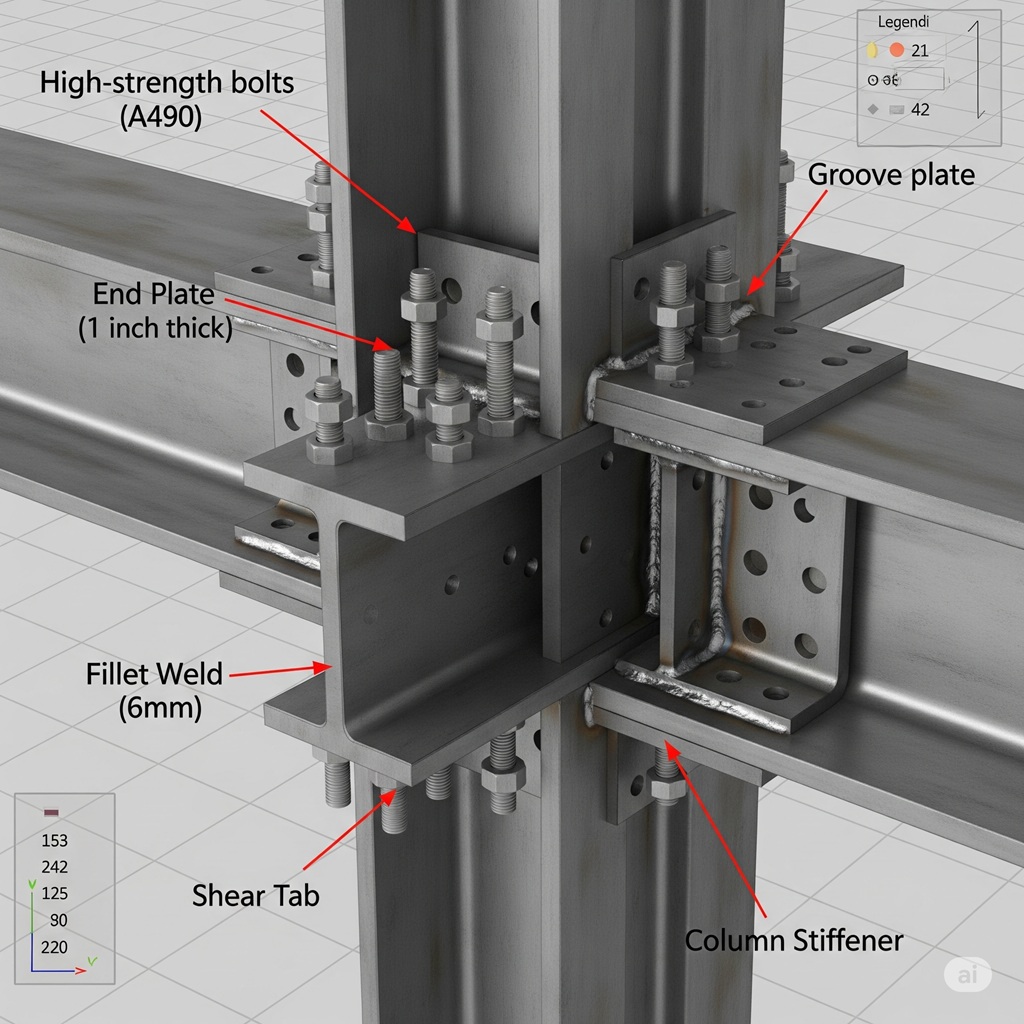
Connection Details: The Litmus Test of Quality Drafting
This is where exceptional drafting truly separates itself from the average. The overall framing can be simple to draw, but the connections are where structures most often fail and where builders face the most ambiguity. A quality set will include clear, large-scale drawings for all non-standard connections, such as:
- Steel beam-to-column connections (e.g., web side plate, fin plate, end plate).
- Beam-to-beam connections.
- Column base plate details, including bolt sizes and grouting requirements.
- Timber framing connections, specifying required bolts, screws, or proprietary brackets.
- Details for concrete elements like drossbachs or cast-in plates.
A drawing set that skimps on connection details is a red flag. It pushes the responsibility onto the builder and steel fabricator, leading to delays and RFIs.
Section 3: The Critical Collaboration: Drafter-Engineer-Builder
The traditional, linear “over-the-wall” workflow is obsolete and inefficient. A successful project relies on a collaborative, iterative process between the key technical players.
The Ideal Workflow:
- Engineer’s Design Intent: The structural engineer performs the analysis and provides the design intent to the drafter. This includes key member sizes, footing concepts, and specifications for critical connections.
- Drafter’s 3D Modelling & Detailing: The structural drafter builds an accurate 3D model based on the engineer’s design and the architectural plans. This is where the bulk of the detailing work for reinforcement, connections, and framing is done. This process often uncovers coordination issues or constructability questions.
- Collaborative Review Loop: The drafter shares the model and preliminary drawings with the engineer for review. The engineer verifies that the details accurately reflect their design intent. This is a crucial feedback loop.
- Constructability Feedback: Before finalising, sharing the model with the lead builder or fabricator can provide invaluable feedback. They might suggest a slight change to a connection detail that makes it vastly easier and faster to erect on site, without compromising the engineering integrity.
This collaborative approach, facilitated by modern BIM technology, transforms the drafting process from a simple documentation task into a value-adding, problem-solving exercise. It’s a workflow we at The Next Rex champion for all our structural drafting projects, as it leads to better outcomes, fewer surprises, and more efficient builds.
Section 4: Compliance is Non-Negotiable: Key Standards in WA
For Perth’s builders and engineers, adherence to Australian Standards is not optional. While the engineer is ultimately responsible for the design’s compliance, the structural drafter is responsible for ensuring the drawings accurately document and detail those compliant requirements. A professional drafter must have a strong working knowledge of:
- National Construction Code (NCC) 2022: Specifically, Volume Two for residential (Class 1 & 10) buildings, which includes acceptable construction practices.
- AS/NZS 1170 Series – Structural design actions: The loading codes that dictate how wind, dead, live, and other loads are calculated. The drafter needs to understand how these loads influence member sizes and connection designs specified by the engineer.
- AS 3600 – Concrete structures: Governs everything from concrete strength and cover to rebar spacing and detailing.
- AS 4100 – Steel structures: The standard for designing and detailing structural steelwork, including connections.
- AS 1684 – Residential timber-framed construction: The go-to guide for compliant timber framing in residential projects.
Drawings that lack references to these standards, or show details that clearly contradict them, are a sign of an inexperienced or unprofessional drafter.
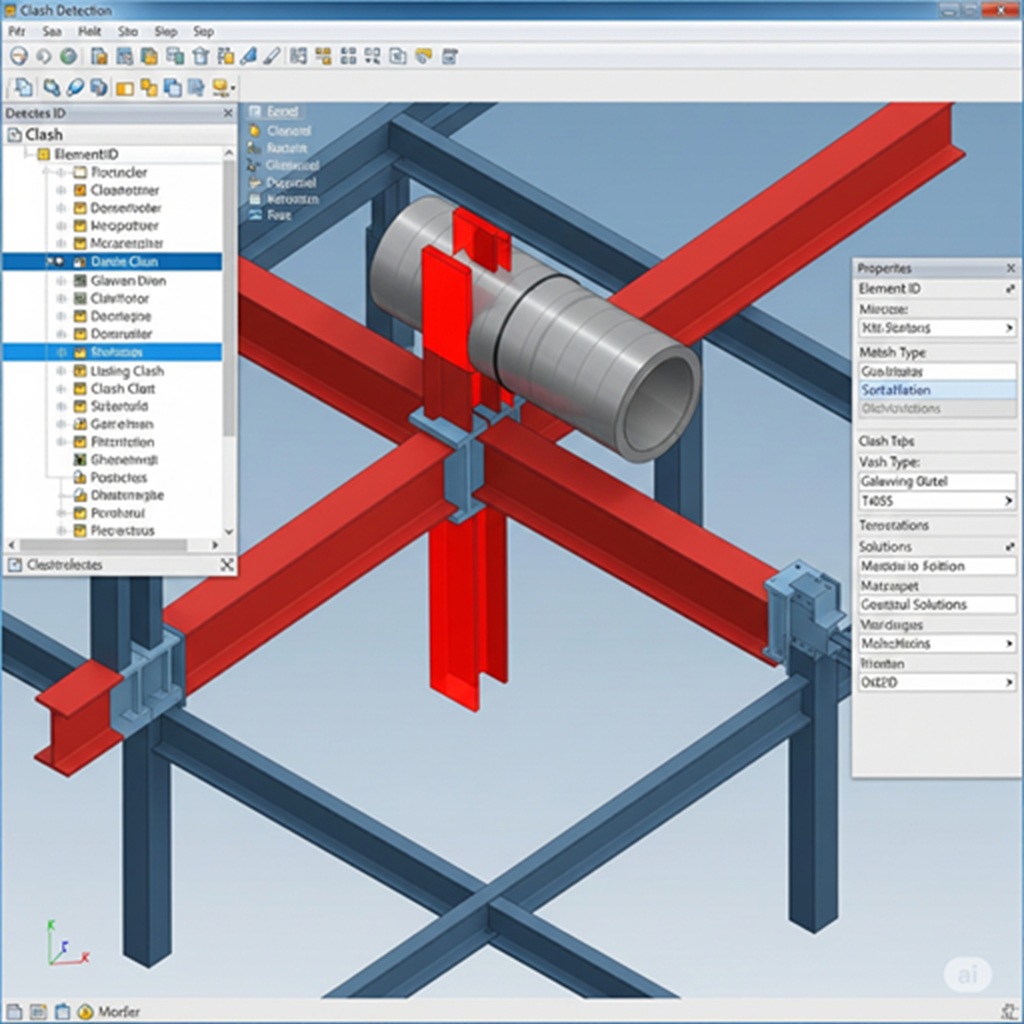
The Technology Shift – Beyond 2D with BIM and Fabrication Models
Section 5: The Technology Shift: Beyond 2D with BIM and Fabrication Models
The move from 2D CAD to 3D Building Information Modelling (BIM) has revolutionised structural drafting and its value proposition. For professionals in Perth, embracing firms that leverage this technology is key to improving efficiency.
The BIM Advantage for Builders & Engineers:
- Superior Visualisation: A 3D model allows you to see the structure from any angle, cut sections anywhere, and truly understand complex geometries before a single piece of steel is ordered.
- Clash Detection: This is arguably the biggest ROI of BIM. The structural model can be federated with architectural and MEP models to automatically detect clashes. Finding a beam that intersects with a major pipe run in the model is a simple fix; finding it on site is a disaster that can cause weeks of delays.
- Accurate Quantity Take-Offs: The model contains rich data. With a few clicks, you can get accurate volumes of concrete, tonnage of structural steel, and lengths of reinforcing bars, leading to more precise cost estimates and material orders.
- A Single Source of Truth: When all parties work from the same federated model, it ensures everyone is on the same page, dramatically reducing errors stemming from outdated 2D drawings.
Models for Fabrication: The value chain extends beyond just the plans. Sophisticated structural models (often created in software like Tekla Structures) can be used to generate shop drawings and NC (Numerical Control) files that are sent directly to CNC machinery for cutting and drilling steel components. This direct model-to-fabrication workflow ensures unparalleled accuracy and efficiency for steel-framed projects.
When engaging a drafting service, asking about their BIM capabilities, their approach to coordination, and their experience with generating fabrication-ready models will tell you a lot about how advanced and valuable their service truly is.
Section 6: How to Select Your Structural Drafting Partner in Perth
Your choice of a structural drafting service is a choice of a project partner. It directly impacts your risk, efficiency, and profitability. Here’s what savvy Perth engineers and builders should look for:
The Green Flags:
- Demonstrable Local Experience: Ask for a portfolio of completed Perth projects similar to yours (e.g., residential double-brick, tilt-panel commercial, industrial steel sheds). This proves they understand local construction methods and engineering challenges.
- Advanced Software Capability: They should be fluent in modern BIM platforms like Revit or Tekla, not just legacy 2D AutoCAD. Ask them about their BIM execution plan and coordination process.
- A Collaborative Mindset: Look for a partner who asks intelligent questions, is willing to provide constructability feedback, and sees themselves as part of the project team, not just a document producer.
- Strong References: Talk to other engineers or builders who have used their services. Ask them about the quality of the drawings, responsiveness, and how they handle challenges.
The Red Flags:
- An Over-reliance on 2D: While 2D drawings are still a required deliverable, a firm that doesn’t model in 3D as their primary process is behind the times.
- Poor Communication: Unresponsiveness or an inability to clearly discuss technical details is a major warning sign.
- A “Bare Minimum” Approach: If their drawings are sparse on details, especially for connections, it means they are pushing risk and work down the line to you.
Conclusion: Drafting is an Investment, Not an Expense
For the seasoned professionals tasked with designing and building Perth’s structures, it’s clear that structural drafting is far more than a commodity service. It is a critical professional discipline that sits at the nexus of design, compliance, and construction.
Investing in a high-quality, collaborative, and technologically advanced structural drafting partner is a direct investment in your project’s success. It reduces RFIs, minimises costly rework, accelerates project timelines, and ultimately allows engineers and builders to focus on what they do best. The result is a de-risked project, a healthier budget, and a superior final structure.
If you’re looking for a structural drafting partner in Perth who understands the technical demands of your projects and is committed to a collaborative, value-adding approach, we should talk.